The Essential Small Business Software Guide (2025-2026 Edition)
Selecting the right software stack is no longer just about finding a tool for a single task; it is about building a scalable digital ecosystem. Whether you are looking for AI-powered accounting, a high-performance CRM, or a robust ERP, your selection must prioritize interoperability (how well tools talk to each other), data security, scalability, and automation capabilities.
In today’s market, the goal is to reduce “manual friction.” Below is a curated overview of industry-leading software categories and products to help your small business compete in a digital-first economy.
1. Financial Management: Accounting & Bookkeeping
Effective cash flow management is the heartbeat of any small business.
Modern Standard: QuickBooks Online & Desktop
QuickBooks remains the industry leader due to its massive ecosystem. While the QuickBooks Online version is the gold standard for real-time collaboration, remote access, and automatic bank feeds. QuickBooks has transitioned to an Online Only version as there really is no Desktop version anymore without paying an Enterprise price for it.
- Key Features: AI-driven transaction categorization, automated invoicing, and seamless integration with payroll and tax professionals.
- Strategy Tip: Choose the Online version if you have remote employees or accountants; choose Desktop only if you have specific regulatory requirements for local data storage.
Open-Source Alternative: GnuCash
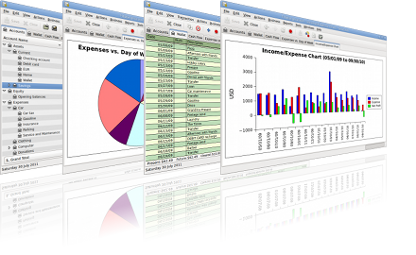
For businesses or freelancers seeking a powerful, zero-subscription-fee solution, GnuCash is a highly respected community-supported option. It is built on professional double-entry accounting principles, making it much more robust than a simple spreadsheet.
- Best For: Users with high technical literacy who want total control over their financial data without recurring SaaS fees.
Small Business to Enterprise-Grade: Sage Accounting
For businesses scaling toward mid-market size, Sage offers sophisticated management tools that handle complex inventory, multi-currency, and deep reporting that simpler apps might miss. Unlike QuickBooks; however, Sage also offers a Small Business version (called Sage 50) that has an offline version–there is also an online version for Small Business if that fits your business best.
2. Visual Marketing & Content Creation
Video is the primary driver of engagement in 2025. If your marketing isn’t visual, it is invisible.
The AI Revolution: AI Video & Design Tools
The landscape has shifted from simple drag-and-drop animation to Generative AI. While classic tools like VidToons serve specific 2D animation needs, modern businesses are increasingly utilizing tools like Canva (for rapid social media design) and HeyGen or Synthesia (for AI-generated video presenters).
- The Goal: Move away from time-consuming manual animation and toward AI-assisted content creation that allows you to produce high-quality video marketing in minutes, not days.
3. Operations: CRM and ERP Systems
Running a company requires a “Single Source of Truth”—one place where all data lives.
The All-in-One Powerhouse: Odoo ERP
Odoo continues to be a titan in the small-to-medium business (SMB) space. Its strength lies in its modularity: you can start with just a CRM and add Warehouse Management, eCommerce, or Project Management as you grow.
- Editions: The Community Edition offers a robust foundation for the tech-savvy, while the Enterprise Edition provides a seamless, cloud-hosted experience with advanced AI features and mobile accessibility.
4. Data Sovereignty & Cloud Infrastructure
Where you store your data is a critical decision for security and compliance.
Private Cloud Solutions: NextCloud
In an era of increasing data privacy regulations (like GDPR), NextCloud is the premier choice for businesses that want “the cloud experience” without giving up control. It is a self-hosted platform that allows you to manage your own files, calendars, and communication channels.
- Strategy Tip: Use NextCloud if your industry (such as legal or medical) requires strict data residency and ownership.
Managed Cloud Services: Ionos & Beyond
For businesses that want the benefits of the cloud without the headache of server maintenance, managed providers like Ionos offer scalable, high-availability storage and hosting solutions that ensure your data is accessible anywhere, anytime.
5. Data Architecture: Database Management
As your business grows, your data becomes your most valuable asset.
The Industry Standard: PostgreSQL
For businesses building custom applications or handling massive datasets, PostgreSQL remains the most advanced, reliable, and open-source relational database in existence. It is highly extensible and supports complex data types, making it future-proof for AI and Machine Learning integrations.
The Web Industry Standard: MySQL
The MySQL database is a very popular database used on the Internet for website databases. As it is a popular web database, it can also be used as a reliable database for business data sets. Plus, if a website uses MySQL then it would be fairly easy to use MySQL as a business database as data from the website could easily be utilized in data analysis and other business processes.
6. Productivity & Office Suites
Efficiency is found in the tools your team uses every single day.
The Subscription Standard: Microsoft 365 & Google Workspace
While not listed in our original 2020 article, any 2026 business discussion must mention these. They are the kings of real-time, cloud-based collaboration.
The Ownership Alternative: LibreOffice
If you prefer to avoid the “subscription trap” and want a commercial-quality office suite that you own outright, LibreOffice is the premier choice. It offers full compatibility with modern document formats (Word, Excel, PowerPoint) without the monthly overhead.
7. The Missing Link: AI & Automation
The biggest mistake a modern business can make is failing to automate.
To truly modernize your software stack, look for tools that integrate with Zapier or Make.com. These “glue” tools allow your Accounting software to talk to your CRM, which then talks to your Marketing tools, creating an automated workflow that works while you sleep.
Need a Custom Tech Audit? The “best” software is subjective to your specific industry, budget, and technical capacity. If you are unsure which stack will support your growth for the next five years, contact us for a professional consultation.
Leave a Reply
You must be logged in to post a comment.